
Rosacea can become part of your everyday life in ways you never expected. It can affect which skincare products you buy, how long you spend in the sun and even how you plan around activities that make your skin react.
Yet rosacea is not simply a cosmetic concern. The condition can persist for years, with periods when the skin settles followed by flare-ups. Getting familiar with your personal triggers and taking a gentler approach to skincare can make the condition easier to manage.
Table of Contents
What does rosacea look like?
There is no single rosacea face.
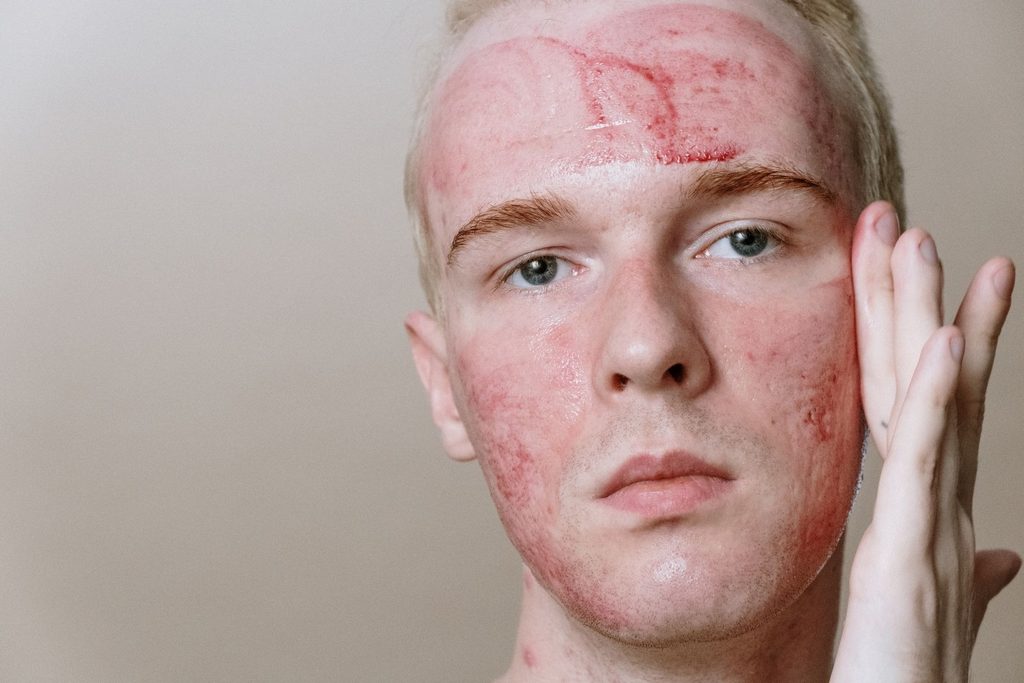
For some people, the first sign is flushing. Their cheeks or nose suddenly become red and warm, then settle again. With time, these episodes can happen more frequently, and the redness may stop disappearing completely.
For others, small red bumps and pus-filled spots become the main problem. This can make rosacea look remarkably similar to acne, particularly when there are no obvious signs of flushing.
You may also notice tiny blood vessels becoming visible across the cheeks or around the nose. The skin itself can feel unusually hot, sore, dry or sensitive.
Rosacea can affect the eyes too. Dryness, irritation, watery eyes, red eyelids and a gritty feeling are among the symptoms that can occur when rosacea involves the eyes.
The condition can also look different on different skin tones. On darker skin, redness may be less noticeable, while warmth, burning, swelling or changes in pigmentation may be more apparent.
Why does rosacea happen?
Rosacea is not caused by poor hygiene, and it is not something you have caught from another person.
The exact reason it develops is still being studied. A combination of genetic factors, inflammation, the immune system and the way blood vessels respond to different stimuli may all play a role. Some people are also more likely to develop rosacea because it runs in their family.
Your skin’s protective barrier can also become more reactive, making certain products, temperatures and environmental conditions harder to tolerate.
Knowing the cause is not always straightforward because rosacea does not develop for exactly the same reason in every person.
Certain things can make rosacea flare, however. These are known as triggers, and they vary from person to person.
Common rosacea triggers
Triggers vary from person to person, so there is no universal list that applies to everyone.
Common triggers include:
- Strong sunlight
- Hot weather
- Spicy foods
- Alcohol
- Very hot drinks
- Stress
- Intense exercise
- Very hot baths or showers
- Certain skincare products
Keeping track of flare-ups can help you notice patterns. If your skin repeatedly becomes irritated after using a particular product or eating certain foods, reducing exposure may help.
Sun protection is also useful. A broad-spectrum sunscreen can help reduce irritation caused by ultraviolet exposure. If sunscreen tends to sting, look for a product made for sensitive skin.
Rosacea in dark skin tones
A long-standing misconception suggests rosacea mainly affects people with lighter skin tones.
In reality, rosacea can affect people of all ethnic backgrounds, including Black South Africans.
Diagnosis can sometimes take longer because the condition does not always present in the same way on darker skin. Persistent redness may be less noticeable, making other symptoms easier to overlook.
Instead, many people experience sensations such as heat, burning, irritation or tenderness. Acne-like bumps may also appear, and flare-ups can sometimes leave darker marks behind after inflammation settles.
Misdiagnosis is not uncommon. Rosacea may be mistaken for acne, eczema or another skin condition entirely.
Looking after rosacea-prone skin
Rosacea-prone skin often responds better to a simple routine than a shelf full of products.
Use a gentle cleanser and avoid scrubbing the face or using harsh exfoliating products. Fragranced products, strong acids and other potentially irritating ingredients may make symptoms worse for some people.
Moisturiser can help reduce dryness and irritation. Apply it gently rather than rubbing the skin vigorously.
It is also worth introducing new skincare products one at a time. This makes it easier to identify a product if your skin reacts badly.
Lifestyle changes can help too, particularly when you know your personal triggers. However, avoiding every possible trigger is not always practical, and lifestyle changes alone may not be enough when symptoms are persistent.
When treatment may be needed
Skin care and trigger avoidance can help, but they may not be enough for everyone.
A doctor may recommend treatment if symptoms are persistent, frequent or affecting your quality of life. Prescription treatment can help with inflammation, facial bumps and other symptoms associated with rosacea. The right option depends on what your skin is experiencing, so treatment should be selected with advice from a healthcare professional.
It is also worth getting medical advice when you are unsure whether you have rosacea at all. Acne, eczema, dermatitis and other skin conditions can have overlapping symptoms, and treating the wrong condition may leave you frustrated with the results.
- RELATED POST: What Causes Acne and How to Treat It Online
Rosacea treatment in South Africa
Finding the right rosacea treatment in South Africa does not necessarily mean spending hours travelling to a clinic.
At Zapmed, you can consult with a doctor online from the comfort of your home. You can discuss your symptoms and medical history with a qualified doctor, who can assess whether treatment is appropriate for you and prescribe medication when clinically suitable.
If medication is prescribed, it can be delivered directly to your home.
The treatment you receive will depend on your individual symptoms and medical assessment. Rosacea can require different approaches depending on whether the main problem is inflammatory bumps, persistent redness, skin sensitivity or eye symptoms.
Online medical care can make it easier to get professional advice without putting off an appointment because of a busy schedule or the hassle of travelling to a clinic.
If you are dealing with persistent facial redness, burning or recurring bumps and think rosacea may be the cause, speaking to a doctor is a sensible place to start.


